Blogerroom
SpaceX Is Now Worth $2.53 Trillion and Just Passed Amazon — What Happens When One Company Owns Space, AI and the Internet
SpaceX just passed Amazon to become America's fifth-largest company. Now it owns rockets, satellites, AI and a coding startup too. Is the price right?
Nine days after its initial public offering, SpaceX has done something that took Amazon nearly three decades to achieve. The rocket company turned satellite internet provider turned artificial intelligence conglomerate has rocketed past Amazon in stock market value, briefly trading above $211 a share and pushing its market capitalization to roughly $2.53 trillion. That is a gain of more than 56% above its $135 IPO price from June 12, and it makes SpaceX the fifth-largest publicly traded company in the United States, ahead of Amazon and within striking distance of Microsoft.
This is not a quiet milestone. It is one of the fastest ascents into the upper tier of the stock market that Wall Street has ever witnessed, and it has been compounded by something almost as striking as the valuation itself: in the same week it overtook Amazon, SpaceX announced a $60 billion acquisition of Anysphere, the company behind the popular AI coding tool Cursor. In barely more than a week of public trading, SpaceX has gone from rocket company to a business that now touches launch vehicles, satellite internet, social media, general-purpose AI, and AI-powered software development all at once. The question worth asking is not just how this happened, but what it actually means when one company starts accumulating this much control over so many different layers of the modern economy, and whether the price tag attached to all of it makes any sense.
From $135 to $211: A Week Unlike Almost Any Other in Market History
To appreciate how extraordinary this run has been, it helps to remember that SpaceX's IPO was already historic before any of this happened. The company priced its shares at $135 on June 12, raising $75 billion in what instantly became the largest public offering ever completed, a record later extended to $85.7 billion once underwriters exercised their option to sell additional shares. The stock opened well above its offer price and closed its first day up roughly 19%, pushing its market value past $2 trillion before trading had even settled into a rhythm.
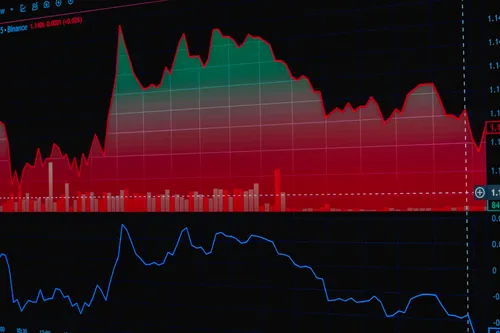
What followed was several days of extraordinary, occasionally chaotic price action. The stock continued climbing through the following week, touching an intraday high above $225 and, for a few fleeting minutes in after-hours trading, implying a market capitalization above $3 trillion, which would have made SpaceX briefly more valuable than Microsoft and Amazon combined relative to where it started. Prices have swung sharply in both directions since, with the stock giving back some gains one day and recovering the next, reflecting just how much speculative energy and fear of missing out has been packed into a single new listing. At its $211.27 level and roughly $2.53 trillion valuation, SpaceX sits just behind Amazon and ahead of Meta among the largest companies in the country, a position that took most of its trillion-dollar peers years of sustained growth and several product cycles to reach.
The Cursor Deal: SpaceX's First Move as a Public Company
If the stock price has been the headline, the substance of what SpaceX actually did with its newfound public-market currency may matter more in the long run. On its first major corporate action as a publicly traded company, SpaceX announced it would acquire Anysphere, the startup behind Cursor, for $60 billion in an all-stock transaction. Cursor has built a strong following among software developers for its ability to use artificial intelligence to automate large portions of the coding process, competing directly with AI coding tools backed by Anthropic and OpenAI, even though the startup has reportedly faced constraints from limited access to computing power.
The strategic logic is straightforward, at least on paper. The Cursor deal folds directly into xAI, the artificial intelligence company SpaceX merged with at the end of February 2026, expanding xAI's footprint in AI-assisted coding, one of the earliest commercial use cases of generative AI that has already started generating meaningful revenue from business customers. For a company that had, until just over a week ago, been known almost entirely for reusable rockets and satellite broadband, adding a fast-growing AI coding business gives it a foothold in enterprise software that none of its previous businesses provided. It is also a signal about ambition and pace: rather than waiting to settle into life as a public company before making major moves, SpaceX used its very first days of trading to announce one of the largest AI acquisitions of the year.
What It Means When One Company Owns This Much of the Stack
This is the part of the SpaceX story that goes beyond a single stock price and touches something more structural about how the modern economy is organized. Within the span of a few months, a single corporate entity has assembled ownership across an unusually wide and unusually foundational set of layers in the technology economy. SpaceX builds and launches the rockets that put satellites and other payloads into orbit. Through Starlink, it operates one of the largest satellite internet networks on Earth, delivering connectivity to consumers, businesses and governments in dozens of countries. Through its merger with xAI, it owns a frontier artificial intelligence company and, by extension, the X social media platform that folded into that same merger. And now, through the Cursor acquisition, it owns a leading AI tool for software development, one of the most commercially important early applications of generative AI.
Lay those pieces side by side and the picture is genuinely unusual. Few companies in history have controlled the literal physical infrastructure for reaching orbit, the communications infrastructure for connecting people to the internet from that orbit, a leading AI model and chatbot platform, a major social media network, and now a popular tool used by software engineers to write code, all under one roof. Each of these businesses individually faces competitors. Starlink competes with other emerging satellite constellations. xAI competes with OpenAI, Anthropic and Google. Cursor competes with AI coding tools built by those same rivals. But the combination of owning meaningful positions across launch, orbit, connectivity, AI and developer tools simultaneously gives SpaceX a kind of vertical reach that none of its individual competitors can claim, because none of them also builds the rockets and satellites that move data around the planet in the first place.
Whether that combination produces genuine synergy or simply an unusually large and complicated conglomerate remains an open question. There is a real argument that owning the rocket, the satellite, the AI model and the coding tool that helps build all of it creates compounding advantages that are difficult for any single-focus competitor to replicate. There is an equally real argument that running five distinct, technically demanding businesses well, simultaneously, is an extraordinarily difficult management challenge, and that combining them under one ticker mostly reflects ambition rather than proven operational synergy.
The Numbers Behind the Hype
It is worth pausing on what SpaceX actually generates in revenue and profit, because the gap between those numbers and the valuation is significant. For the 2025 fiscal year, SpaceX posted revenue of roughly $18.7 billion alongside a net loss of approximately $4.9 billion. Set against a market capitalization in the $2.5 trillion range, that works out to a price-to-sales ratio well above 100, a level that even by the standards of high-growth technology stocks is extreme. For comparison, Amazon generated $723 billion in revenue over its trailing four quarters while remaining solidly profitable, and even Tesla, SpaceX's corporate cousin and one of the more richly valued companies in the market, trades at a fraction of that multiple.
The bullish counterargument rests almost entirely on projected future growth rather than current financial performance. Investment bank forecasts shared with IPO investors envisioned SpaceX's revenue climbing from $18.7 billion in 2025 toward thereabouts of $330 billion to $474 billion by 2030, with the AI business under xAI expected to become the dominant driver of that growth. That is an enormous bet on execution across multiple difficult businesses simultaneously, and it depends heavily on AI revenue materializing at a scale that has not yet been demonstrated by any company in the industry, SpaceX included.
What Ordinary Investors Should Honestly Think About This
For everyday investors looking at SPCX and wondering whether to buy in at current levels, the honest answer requires holding two things in mind at once. The first is that SpaceX is, by almost any traditional measure, an extraordinary company. Its rocket business has no real peer in terms of launch cadence and reusability. Starlink is a genuine, profitable infrastructure business with global reach. The decision to fold xAI and now Cursor into the same entity reflects a coherent, if extremely ambitious, vision of where value will accrue in the coming decade. None of this is hype manufactured out of nothing.
The second thing to hold in mind is that almost none of that long-term promise is reflected in the company's current financial results, and a meaningful share of the recent stock move appears to be driven by the kind of fear-of-missing-out dynamics that accompany any historic, headline-grabbing IPO rather than by a careful reassessment of underlying value. A company trading at over 100 times trailing sales, that lost nearly $5 billion in its most recent fiscal year, and that has swung by tens of billions of dollars in valuation within single trading sessions, is not a stock whose price reflects calm, well-reasoned consensus. It reflects a market trying, in real time and with very limited historical precedent, to figure out what a company like this should actually be worth.
For investors with a long time horizon who believe deeply in SpaceX's execution across rockets, satellites and AI, and who can tolerate the very real possibility of severe volatility along the way, there is a coherent case for holding a position sized appropriately within a diversified portfolio. For investors looking to buy because the stock has already gone up sharply and seems unstoppable, the more honest framing is that buying a $2.5 trillion company nine days after its IPO, on the back of a single acquisition announcement, is a momentum trade dressed up as an investment thesis. It might work out. Plenty of momentum trades in extraordinary companies have. But it is worth being clear-eyed about which of those two things you are actually doing before committing real money.
The Bottom Line
SpaceX has, in the space of little more than a week, gone from a highly anticipated IPO to the fifth-largest company in the United States, while simultaneously announcing one of the largest AI acquisitions of the year. That is a genuinely remarkable corporate achievement, and it reflects real underlying strength in the company's rocket and satellite businesses, alongside a bold, sweeping bet on artificial intelligence. It is also, by almost every traditional valuation measure, priced for a future that has not yet arrived, built on revenue projections that are still years away from being tested against reality. What happens next, whether SpaceX consolidates its position among the most valuable companies on Earth or whether this turns out to be the peak of an extraordinary post-IPO frenzy, will depend less on how exciting the story sounds today and more on whether the company's various, very different businesses can actually be run well, together, at a scale no single company has attempted quite like this before.
*This article is for informational purposes only and does not constitute financial or investment advice. Always conduct your own research before making investment decisions. Data referenced is sourced from Bloomberg, Yahoo Finance, The Motley Fool, ABC News, and Investing.com as of June 21, 2026, and market conditions for this newly listed and highly volatile stock may change rapidly.*
Written by
Mr. Jitendra Bhatt
Deep understading of finance area and writer covering markets, investing, and economic policy.