Blogerroom
Oil Drops to $76 After the Iran Peace Deal — What It Means for Inflation, the Fed and Your Wallet
Oil just fell to $76 after the Iran peace deal. Here is what that means for gas prices, inflation, the Fed, and your household budget.
For months, every American filling up at the pump has been paying a kind of invisible war tax. Since late February 2026, when the United States and Israel entered a sustained military conflict with Iran, oil markets have been gripped by fear that the Strait of Hormuz — the narrow waterway through which roughly a fifth of the world's oil flows — could be shut indefinitely. That fear sent Brent crude soaring past $140 a barrel at its peak, the highest level since 2008, and dragged gasoline prices, grocery bills and household budgets along with it. Now, after President Trump signed a US-Iran memorandum of understanding at the Palace of Versailles on June 17, that fear is unwinding fast. Brent crude has tumbled to around $76 to $80 a barrel, and the question on everyone's mind is simple: what does this actually mean for my wallet?
This is not a small story confined to traders and energy analysts. Oil is the most important commodity in the global economy precisely because it touches almost everything else — what it costs to drive to work, what it costs to ship a package, what it costs to grow and transport food. When oil prices swing this dramatically, the effects ripple through inflation reports, Federal Reserve meetings and household budgets within weeks. Here is what is actually happening, and what it could mean for you.
From $140 to $76: How Big a Move Is This?
To understand how significant this drop is, it helps to remember just how extreme the run-up was. When the conflict began in late February, Brent crude was trading in a relatively calm range in the $60s and $70s. As Iran threatened to close the Strait of Hormuz and both sides exchanged strikes on energy infrastructure, prices spiked above $140 a barrel — a level not seen since the global financial crisis era. Oil spent much of the spring oscillating between roughly $90 and $115 a barrel as ceasefire talks repeatedly collapsed and reignited, with traders whipsawed by every diplomatic signal out of Washington, Tehran and the Gulf.
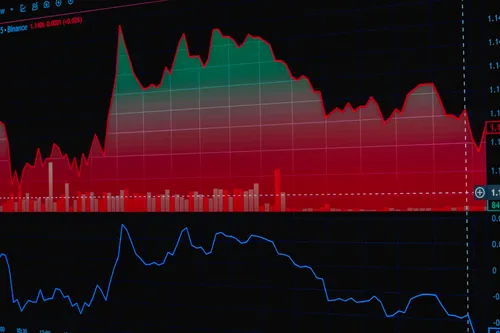
The signing of the 14-point peace framework at Versailles changed the calculus almost overnight. As part of the agreement, the US agreed to lift sanctions on Iran, which will eventually allow Tehran to sell more oil on international markets, while the broader normalization of shipping through the Strait of Hormuz has already begun. Tankers that had been stranded for weeks started moving again within days of the deal, and Kuwait announced it would begin ramping up production. The combined effect has been a slide of roughly 8% in a single week, pushing Brent down to the high $70s — territory that erases nearly all of the price increase the conflict had added to the market since it began. Going from $140 to $76 is not a minor correction. It is one of the sharpest oil price reversals tied to a single geopolitical event in recent memory.
It is worth adding a note of caution here, because oil markets tied to this conflict have whipsawed before. Earlier ceasefire announcements in April triggered similarly sharp drops, only for prices to roar back above $100 when talks broke down and fighting resumed. Markets are treating the Versailles signing as more durable because it is a signed, formal agreement rather than a verbal truce, and because actual tanker movement through Hormuz has already resumed as evidence of real implementation. But continued stability is not guaranteed, and any sign that the deal is unraveling could send prices climbing again quickly.
What This Means for Gas Prices
The most immediate and visible effect for most Americans will be at the gas pump, and the mechanics here are fairly predictable. As a rough rule of thumb, every $10 change in the price of a barrel of crude translates to roughly 25 cents at the pump over the following weeks, since crude oil is the single biggest input cost in a gallon of gasoline. With Brent having fallen by roughly $30 to $40 a barrel from its peak, that points toward a meaningful drop in pump prices over the coming weeks, even after accounting for the seasonal cost of summer-grade gasoline blends that refiners are required to use between spring and early autumn.
National average gas prices had been pushed well above the $4 mark during the worst of the conflict, squeezing household budgets at a time when many families were already feeling stretched. A sustained move in crude back toward the high $70s and into the $70-to-$80 range historically corresponds to national averages closer to $3.00 to $3.40 a gallon, which would represent genuine relief after months of elevated prices. The catch is timing: retail gas prices tend to lag crude oil movements by several weeks, since stations are still selling fuel that was purchased and shipped before the price drop took hold. Drivers should expect the relief to show up gradually rather than overnight, with the most noticeable savings likely appearing over the following month if the lower oil price holds.
How This Feeds Into Inflation
The connection between oil prices and the inflation figures that dominate financial news is direct and well understood. Energy costs are a major component of the Consumer Price Index, or CPI, both directly — through gasoline, heating oil and natural gas prices — and indirectly, since transportation and energy costs are embedded in the price of almost everything else, from groceries to airline tickets to manufactured goods.
The scale of the recent inflation problem illustrates exactly why this matters. The CPI report for May 2026 showed prices rising 4.2% over the previous year, with much of that increase driven by a 3.9% monthly jump in energy prices that pushed the 12-month increase in energy costs to 23.5%. That is an extraordinary single-category swing, and it was almost entirely a function of the Iran conflict's effect on oil markets. Core inflation measures, which strip out volatile food and energy prices, were notably calmer over the same period, which tells you that energy was doing most of the damage to the headline number Americans actually feel in their daily lives.
If oil prices stabilize in the $76-to-$80 range, or fall further, that energy-driven component of inflation should begin to unwind in the coming months' CPI reports, and the same dynamic applies to the Producer Price Index, or PPI, which measures price changes at the wholesale and production level before they reach consumers. Lower oil costs reduce shipping, manufacturing and input costs across a huge swath of the economy, and those savings typically show up in the PPI before they fully filter down to retail prices. None of this happens instantly. Inflation data is collected and released with a lag, and price decreases tend to pass through supply chains more slowly than price increases do. But the direction of travel, if the peace deal holds, points toward meaningfully cooler energy-driven inflation over the second half of 2026.
What the Fed May Do Differently Now
The Federal Reserve has been navigating an unusually difficult balancing act throughout this conflict. At its June 17 meeting, the same day the Versailles agreement was signed, the Federal Open Market Committee was widely expected to hold interest rates steady, with officials wary of cutting rates while energy-driven inflation was still running hot and the geopolitical situation remained unresolved. Raising rates further was equally unappealing, given the risk of choking off economic growth over what officials hoped might prove to be a temporary, conflict-driven price spike rather than a durable inflationary trend.
A sustained drop in oil prices changes that calculation meaningfully. If energy costs continue falling and the CPI and PPI reports over the summer show inflation cooling back toward the Fed's target, policymakers will have considerably more room to consider cutting interest rates later in the year without worrying that doing so will reignite inflationary pressure. Fed officials have repeatedly stressed that they look through temporary, supply-driven price shocks when those shocks are clearly tied to a specific, identifiable cause — and a war-driven oil spike that reverses once the war de-escalates is about as clean an example of that kind of shock as exists. That does not guarantee an imminent rate cut; the Fed will want to see several months of consistent data confirming the trend before acting, and will also be watching core inflation, the labor market and other indicators that have nothing to do with oil. But the direction of risk has shifted in a way that makes future rate cuts more plausible than they looked when oil was still near $100 a barrel.
What Ordinary Americans Should Do With Their Finances
For households, the most sensible response to falling oil prices is not dramatic action but a few practical adjustments. If gas prices do fall meaningfully over the coming weeks, this is a reasonable moment to revisit your monthly budget and redirect the savings deliberately, whether toward paying down higher-interest debt, building an emergency fund, or catching up on contributions to retirement accounts that may have been squeezed during the months of higher pump and grocery prices.
It is also worth watching mortgage and loan rates closely if you have been waiting to refinance or take out a major loan. If inflation does cool as oil-driven price pressure fades, and the Fed begins signaling rate cuts later in the year, borrowing costs across the economy — mortgages, auto loans, credit cards — could ease somewhat as well, though this tends to happen gradually and with a lag after any actual Fed action. It rarely pays to try to perfectly time a refinancing decision around a single Fed meeting, but staying informed about the broader trend can help you act when a genuinely favorable window opens.
For anyone with investments, it is worth remembering that markets had already priced in a great deal of uncertainty around the Iran conflict, and the easing of that uncertainty has been a meaningful tailwind for stocks broadly, particularly for airlines, retailers, shipping companies and other businesses with significant exposure to fuel and transportation costs. At the same time, energy company stocks, which had benefited from elevated oil prices, may face more difficult conditions if prices stay lower for an extended period. As always, broad diversification rather than trying to bet heavily on any single outcome from a fast-moving geopolitical situation remains the more prudent approach for most individual investors.
Finally, keep some healthy skepticism about how durable this relief will be. This conflict has produced multiple false dawns already, with oil prices plunging on ceasefire announcements only to rebound sharply when talks broke down weeks later. The Versailles agreement looks more substantial than earlier truces because it is a signed, multi-point framework with actual tanker movement and production increases already underway rather than a verbal pause in hostilities. But a regional peace process spanning Iran, Israel, Lebanon and the broader Gulf, as Vice President Vance has described the deal's ambitions, involves a great many moving parts that could still go wrong. Plan your finances around the relief that is actually showing up in your bank account and at the pump, rather than assuming the lowest prices seen this week are guaranteed to last.
The Bottom Line
A war that sent oil above $140 a barrel and pushed inflation to its highest pace in years is, for now, cooling off, and the market's reaction has been swift and significant. If the Versailles agreement holds and Brent crude stabilizes in the $75-to-$80 range, Americans can reasonably expect gas prices to ease over the coming weeks, energy-driven inflation pressure to fade from the CPI and PPI reports over the summer, and the Federal Reserve to gain more flexibility to consider interest rate cuts later in the year. None of that is guaranteed, and this conflict has surprised markets in both directions before. But for households that have spent months absorbing the cost of a war fought thousands of miles away, the direction of this latest move is, for once, the right one.
*This article is for informational purposes only and does not constitute financial advice. Oil and economic data referenced reflect reporting from CNBC, the Bureau of Labor Statistics, CNN, Trading Economics, and GasBuddy as of June 19 and 20, 2026, and market conditions may change rapidly.*
Written by
Mr. Jitendra Bhatt
Deep understading of finance area and writer covering markets, investing, and economic policy.