Blogerroom
Ford Shares Up 28% Since Pivoting to AI Battery Storage — What This Tells Investors About Where Car Companies Are Heading
Ford is up over 28% since launching Ford Energy on May 12. GM just followed with sodium-ion. Here's what the auto-to-energy pivot means for your portfolio.
A month ago, Ford Motor Company was a struggling automaker fresh off a $19.5 billion electric vehicle writedown, with its shares trading in the $11 range and analysts debating how deep the EV losses would go before they stabilised. Today, that same stock is trading near multi-year highs after a move that surprised even the most seasoned auto industry observers. What changed was not a new truck launch, not a better EV battery, and not a recovery in car sales. What changed was that Ford told Wall Street it was getting into a completely different business. On May 12, 2026, the company launched Ford Energy — a wholly owned subsidiary dedicated to manufacturing and selling grid-scale battery energy storage systems. Within a week, it had its first major customer. Within three weeks, its stock had surged 28% from the $12 range to above $15.90, touching levels it had not seen in years. General Motors followed just four weeks later with its own energy storage announcement, the GM-Peak Energy sodium-ion partnership unveiled on June 9. Something significant is happening in the US auto industry — and investors who understand what is driving it will be better positioned for the rest of the decade.
What Ford Energy Actually Is
The most important thing to understand about Ford Energy is what it is not. It is not an extension of the company's troubled EV ambitions. It is not another attempt to compete with Tesla in the consumer electric vehicle market. And it is not a side project. Ford has committed $1.5 billion in manufacturing capacity and facility development to build Ford Energy into a genuine grid-scale battery storage supplier, with a target of reaching 20 GWh in annual production capacity by late 2027. The product is called the DC Block: a containerised battery energy storage system designed for utility-scale grid integration. Think of it as a large, modular battery pack — not for a car, but for a power grid.
The DC Block competes in a market currently dominated by Tesla Energy and LG Energy Solution, and it is arriving at a moment when demand in that market is growing faster than almost any sector in the US economy. The reason is not complicated. The AI boom has triggered an unprecedented buildout of data centres, and data centres require enormous, reliable supplies of electricity. A single large AI data centre can consume as much power as a small city. When multiplied across the hundreds of facilities being planned or built by Amazon Web Services, Microsoft Azure, Google Cloud, and their peers, the cumulative demand for electricity — and for the battery storage systems that smooth out the supply of that electricity from the grid — is staggering. Data centres now account for roughly half of the country's incremental electricity demand growth, and AI-focused data centre power consumption surged 50% in 2025 alone. Battery energy storage systems are the infrastructure layer that makes an AI-powered economy possible.
The EDF Deal and Why Wall Street Reacted the Way It Did
On May 18, 2026, six days after Ford Energy's formal launch, the company signed a five-year framework agreement with EDF Power Solutions North America, one of the largest grid infrastructure operators on the continent. Under the agreement, EDF has the option to procure up to 4 GWh of Ford's DC Block systems per year, totalling 20 GWh over the life of the contract, with deliveries beginning in 2028. EDF Power Solutions alone manages gigawatt-scale grid infrastructure projects across North America, making it an anchor customer of exactly the kind that validates a new business line in the eyes of institutional investors.
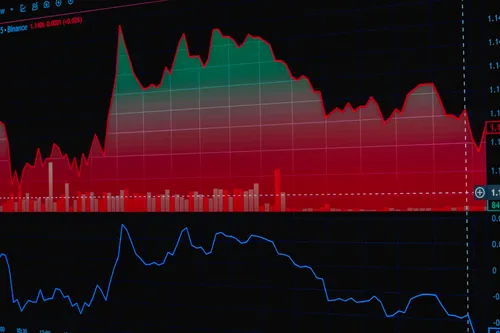
The market's reaction was swift. Ford's stock gained 8.85% on May 22 as the EDF deal was reported. By May 27, when Morgan Stanley formally framed its investment case around Ford Energy's commercial progress, the stock gained another 3.82% to trade around $15.90. Morgan Stanley called the EDF deal Ford Energy's first major commercial win and stated explicitly that it sees a "fairly high likelihood" of additional large-scale energy storage contracts with utilities, data centres, and hyperscalers. The bank's $14 price target — which had already been surpassed by the time of the note — reflected a conservative baseline that the market was rapidly outrunning. The stock closed at $16.65 on May 28, trading near a four-year high and posting a 36% gain from the $11.50 to $12 range where it had been trading in early May.
Barclays offered its own perspective, estimating that Ford Energy has the potential to contribute approximately $3 billion in added annual revenue and $300 million to $500 million in EBIT once the business scales to its 20 GWh target. Those are not automotive-margin numbers. Battery energy storage systems command significantly higher margins than cars, generate repeat-order contract revenue tied to utilities capital expenditure cycles, and are exposed to a category of demand — electricity infrastructure for AI — that is growing regardless of consumer sentiment, interest rates, or the economic cycle. For a market that had been valuing Ford as a distressed legacy automaker, the Ford Energy story offered a complete narrative reset.
GM Follows with a Different Bet on the Same Thesis
General Motors took a different path to the same destination on June 9, when the company used its GM Empower 2026 event in San Francisco to announce its partnership with Peak Energy, a Denver-based grid storage startup. Rather than producing lithium iron phosphate batteries — the current standard technology for grid storage applications — GM and Peak Energy are betting on sodium-ion chemistry. The distinction matters both technologically and strategically.
Sodium-ion batteries use sodium instead of lithium as the charge carrier. Sodium is one of the most abundant elements on Earth, meaning the raw material for these batteries is not subject to the supply chain vulnerabilities, geopolitical risks, or price volatility that have plagued the lithium supply chain. Sodium-ion cells also carry a lower fire risk than lithium-ion technology, making them particularly attractive for large stationary storage installations where thermal safety is a priority. And Peak Energy's specific implementation — a passively cooled storage system that eliminates the energy-intensive active cooling required by conventional LFP batteries — promises to reduce grid storage costs by approximately 20% compared to existing technologies. Kurt Kelty, GM's vice president of battery and sustainability, was direct about the commercial logic: "When you're talking to a utility, a hyperscaler, or other power providers in need of energy storage solutions, their priority is not maximising range or minimising weight. It is delivering reliable, affordable power over long periods of time in real-world conditions."
GM is developing prototype sodium-ion cells at its Wallace Battery Cell Innovation Center in Warren, Michigan, with the first trial production expected in 2028. Outside of China, no other automaker has announced plans to build sodium-ion cells for grid storage, giving GM a potential technology leadership position if the chemistry performs as expected. The GM-Peak Energy partnership also comes with a GM Ventures equity stake in Peak Energy — a structure that gives GM upside if the startup succeeds — and builds on an existing relationship: GM battery packs were already being used in a 12MW/63MWh storage system in Nevada serving Crusoe Energy, an AI data centre operator, giving both companies real-world proof of concept before the formal announcement.
The Grid Storage Market: Why the Numbers Justify the Excitement
To understand why both Ford and GM are pivoting to grid storage, you need to understand how large the market is and how quickly it is growing. US demand for grid batteries is expected to double by 2030 to more than 100 GWh annually, according to Bloomberg NEF. The global battery energy storage market was valued at approximately $65 billion in 2024 and is projected to reach $435 billion by 2034, a compound annual growth rate of just under 20%. Morgan Stanley estimates that Ford Energy alone is targeting a $10 billion opportunity within that market. And the demand driver is not going away: AI infrastructure investment is accelerating, not moderating, and every AI data centre needs reliable power and the storage systems that provide it.
The competitive landscape is currently dominated by Tesla Energy — the division of Tesla that manufactures Megapack, its utility-scale battery product — and by LG Energy Solution and CATL, the South Korean and Chinese battery giants. Tesla's Megapack has been the benchmark product in the market, with a strong track record and a growing order backlog. But Tesla Energy also has more demand than it can currently supply, and the US government — through the Inflation Reduction Act's domestic content requirements and the Treasury's guidance on battery production tax credits — has created powerful incentives for domestic manufacturers. Ford's DC Block and GM's sodium-ion cells both qualify for those incentives in ways that Chinese-manufactured battery systems do not, giving domestic automaker-backed products a structural cost advantage in the US market.
What Investors Should Watch When Evaluating the Pivot
For investors trying to evaluate Ford and GM as energy companies rather than purely as automakers, the frameworks are different, and getting them right matters. Several specific things are worth monitoring as both companies develop their energy storage businesses.
The first is contract conversion. The EDF deal is a framework agreement, not a firm purchase order for the full 20 GWh. EDF has the option to procure up to 4 GWh per year — the word "option" is load-bearing. Framework agreements are genuine commercial validation, but they become revenue only when customer purchase orders are placed and fulfilled. Morgan Stanley's expectation of additional hyperscaler and utility contracts is bullish, but it is a forecast, not a fact. Investors should watch for concrete, firm purchase orders — particularly from the hyperscalers (Amazon, Microsoft, Google) that are the largest and most financially powerful buyers in the grid storage market.
The second is margin realisation. Barclays' estimate of $300 million to $500 million in EBIT from Ford Energy assumes successful execution of the business at 20 GWh scale by late 2027. The distance between a five-year framework agreement and 20 GWh in annual production is substantial. Ford has committed $1.5 billion to manufacturing capacity, but battery storage manufacturing is a capital-intensive, technically demanding business with its own supply chain complexities. Execution risk is real, and investors should be sceptical of any model that assumes smooth ramp-up.
Third, the duration of the stock move. Ford's 36% gain from its early May lows to its late May highs was one of the sharpest moves in the stock's recent history, driven primarily by narrative repricing rather than reported revenue. The stock was at a four-year high while the actual revenue from Ford Energy does not appear until 2028 at the earliest. Investors who bought at $11.50 have been rewarded handsomely. Investors buying above $15 are paying for a business that does not yet exist in a financial reporting sense. That is not necessarily wrong — markets price future cash flows — but it requires a significantly longer time horizon and a higher tolerance for execution disappointment.
The fourth thing to watch is GM's trajectory. GM's sodium-ion bet is earlier-stage than Ford's DC Block, with commercial production still multiple years away. But it is also more technologically ambitious, targeting a chemistry that could ultimately be cheaper and safer than anything the current market offers. GM's stock has not moved as dramatically as Ford's in response to the energy storage announcements, which means the market has not yet fully priced in the optionality that the Peak Energy partnership creates. If the sodium-ion cells hit their technical targets and Peak Energy's $1.1 billion order backlog converts to revenue — the company has projected $100 million in sales by 2027 — the market's reassessment of GM as an energy company could mirror what happened to Ford in May.
Conclusion
The Ford Energy story is the most consequential strategic pivot by a major US automaker in years. It did not happen because Ford found a way to build better cars. It happened because Ford's leadership looked at the AI-driven grid storage market, recognised that the battery manufacturing expertise they had built for EVs was directly applicable to a faster-growing and higher-margin adjacent market, and moved quickly to establish a commercial position. The 28% stock gain from the launch of Ford Energy to its late May highs reflects Wall Street's recognition that this is not a gimmick — it is a structural repricing of what Ford is worth when you add energy storage optionality to the automotive base.
GM's June 9 announcement confirms that the first-mover advantage Ford established is already being contested. Two of the three largest US automakers are now publicly and materially committed to competing in a market where the demand driver is artificial intelligence, the infrastructure buildout is measured in hundreds of billions of dollars, and the product — reliable, affordable, domestically manufactured grid storage — is not yet available in the quantities the market needs. For investors, that combination of genuine demand, early commercial validation, and a competitive landscape still forming is exactly the kind of setup that creates the most interesting opportunities — and the most demanding analytical challenges. The auto industry is pivoting to energy. The question is which companies execute well enough to earn the valuation the market is beginning to assign them.
*This article is for informational purposes only and does not constitute financial advice. Data sourced from Morgan Stanley, Barclays, Bloomberg NEF, CNBC, TechCrunch, Yahoo Finance, and company announcements from Ford Motor Company and General Motors as of June 9–14, 2026. Consult a qualified financial advisor before making investment decisions.*
Written by
Mr. Jitendra Bhatt
Deep understading of finance area and writer covering markets, investing, and economic policy.