Blogerroom
China Hits 4.5% Growth Floor on Exports; Retail Sales +1.1%
China's Q3 GDP grew 4.5%, beating forecasts, as September exports jumped 36.3% while retail sales rose 1.1% and property investment fell 20.6%.
China's economy grew 4.5 percent in the third quarter, which is exactly the bottom of Beijing's full-year target. The National Bureau of Statistics (NBS) reported the figure on Monday, October 19, and it beat the 4.4 percent that a Reuters poll of economists had expected. The headline reads like relief. The details say that one engine is running hard and the other is barely idling.
A number sitting on the floor
Growth picked up from 4.3 percent in the second quarter, which had been the weakest reading in about three years, according to Reuters as relayed by SBS. The first quarter was 5.0 percent. Over the first nine months the economy expanded 4.6 percent, inside the government's 4.5 to 5 percent target range for 2026, the NBS said. On a quarter-on-quarter basis, output grew 1.2 percent.
Beijing's statisticians put a positive frame on the data. NBS deputy head Mao Shengyong said the economy added 5.7 trillion yuan in output in the first nine months, the largest increase for that period in five years, and that new growth drivers contributed more than 40 percent of growth, according to Xinhua. Services rose 5.2 percent over the nine months, with information transmission, software and IT services up 10.4 percent.
That is a reasonable account. It is also the account the government would give in any quarter, so the more useful question is what carried the number.

What carried it: the export machine
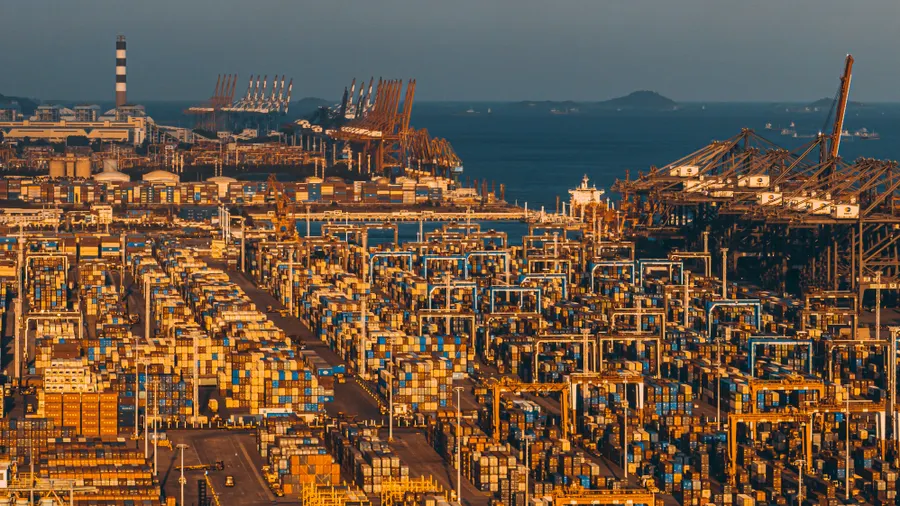
Customs data, cited by Vantage Markets from the General Administration of Customs, showed September exports of $447.18 billion, up 36.3 percent from a year earlier, and a trade surplus of $133.53 billion for the month. Across January to September the surplus reached $938.11 billion, and SBS reported it is expected to pass $1 trillion with the October release. Xinhua separately reported that total trade grew 27.5 percent in September, a different measure from exports alone.
Industry followed. Industrial output rose 5.5 percent in September from 5.2 percent in August, according to Outlook India's account of the NBS data. The sheer size of the surplus has raised concern among major trading partners that China is relying heavily on overseas markets to sustain growth.
What did not: the consumer and the builder
The other side of the ledger is thin. Retail sales rose 1.1 percent in September from a year earlier, up from 0.4 percent in August. Property investment fell 20.6 percent in the first nine months of 2026, and fixed-asset investment fell 7.2 percent over the same period, Outlook India reported.
Put the numbers next to each other. Exports are growing in the double digits and retail sales at about one percent. An economy whose households spend little while its factories sell abroad tends to run a large trade surplus, because output exceeds what is absorbed at home. The surplus is closely tied to weak consumption. It is largely the same story, seen from the customs office.
Why the rest of the world cares
Large surpluses draw responses. Trade tensions with the European Union are mounting, and efforts to curb imports of Chinese vehicles could weigh on one of the country's key export industries, Outlook India noted. A slowdown in global demand for technology products could also challenge a manufacturing-led strategy. If trading partners raise barriers, the export engine that carried the third quarter will be the first to feel it.
The International Monetary Fund forecasts 4.5 percent growth for China this year, at the bottom of the target range, and has called for stronger fiscal support to boost domestic demand and address the weakness in property, according to the same report. In other words, the IMF reads the data much as the numbers suggest: the target is within reach, but the balance is lopsided.
What it means for policy
A reading above forecasts reduces the pressure on Beijing to launch large-scale stimulus right away, Outlook India said. That may be the real market consequence of the day. Growth that meets the target through exports lets policymakers avoid the harder choices on household income, social spending and the property overhang.
There is a trade-off in that comfort. The longer consumption stays at around one percent and the surplus keeps widening, the more likely it is that other economies respond with tariffs or import limits. A 4.5 percent print bought with a $133.5 billion monthly surplus is not the same quality as a 4.5 percent print built on spending at home.
What to watch next
The NBS calendar sets the next checkpoints. The official purchasing managers' index is due on October 31, consumer prices on November 9 and the October activity data on November 16, Vantage Markets listed. The customs figures for October are the test of the $1 trillion surplus milestone.
For a reader trying to judge China's momentum, the number to follow is not GDP. It is retail sales. If it stays near one percent while exports keep soaring, the fourth quarter will look like the third, and the pressure from China's trading partners will keep building.
---
Written by
Mr. Jitendra Bhatt
Deep understading of finance area and writer covering markets, investing, and economic policy.