Blogerroom
BOJ Hikes Rates to 31-Year High, But the Yen Still Falls
The Bank of Japan raised rates to 1.25%, a 31-year high, in a split 7-2 vote, but the yen weakened anyway on doubts about the pace ahead.
A rate hike that should have strengthened the yen, and didn't
The Bank of Japan raised its benchmark interest rate by 25 basis points to 1.25% on Friday, pushing Japanese borrowing costs to their highest level since 1995, a genuine 31-year milestone for a country that spent most of the past three decades trapped near zero or negative rates. By the conventional logic of currency markets, a rate hike this size should have strengthened the yen, since higher rates typically attract foreign capital seeking better returns. Instead, the yen weakened to 156.16 against the dollar in the hours following the announcement, a counterintuitive reaction that says as much about what the Bank of Japan didn't do as what it did.
The decision wasn't unanimous. The policy board split 7-2, with members Toichiro Asada and Ayano Sato dissenting in favor of holding rates steady, a genuine internal disagreement over how fast Japan's tightening cycle should move that markets appear to have read as a signal in its own right.
Why the vote split matters more than the number itself
BOJ Governor Kazuo Ueda's board delivered a rate increase that was, by most accounts, already priced into markets ahead of Friday's meeting. What wasn't fully priced in was the composition of the dissent. Asada and Sato are both considered reflationists, policymakers generally skeptical of tightening too aggressively after Japan spent decades fighting deflation rather than inflation, and both were appointed earlier this year by Prime Minister Sanae Takaichi. Their dissent, from board members installed by the current government, adds a layer of political texture to what might otherwise read as a purely technical policy disagreement.
That split vote carries real signaling weight for currency traders. Yen strength depends heavily on the interest-rate differential between Japan and other major economies, and that differential is shaped less by any single rate move than by how quickly markets expect the BOJ to keep hiking. A 7-2 vote, with two dissents from government-aligned reflationists, reads as evidence that the pace of future tightening remains genuinely contested inside the institution, rather than a settled, accelerating trajectory markets could confidently price in.
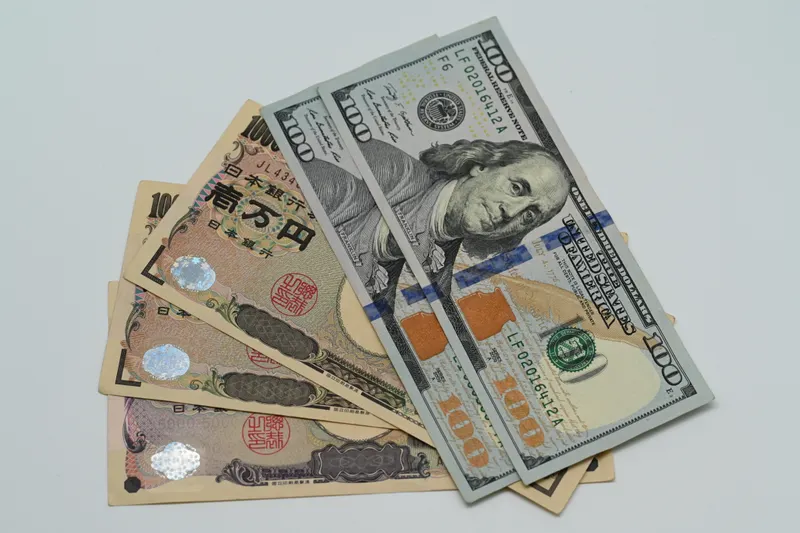
The math behind why the yen didn't rally
If markets believe the BOJ will raise rates only slowly and cautiously from here, the interest-rate gap between Japan and higher-rate economies like the United States narrows more gradually than a single 25-basis-point move might suggest, limiting how much the yen can appreciate even after a genuine hike. That gap widened further just two days earlier when the Federal Reserve raised its own benchmark rate to a range of 3.75% to 4%, meaning Japan's 1.25% policy rate still sits dramatically below where U.S. rates now stand, even after Friday's hike. The European Central Bank has separately pushed its own key rate to 2.5%, meaning all three of the world's major central banks are now tightening simultaneously, a genuinely unusual moment of synchronized global monetary policy that leaves Japan's real interest-rate gap with its peers still substantial despite years of gradual normalization.
Underlying that dynamic is a structural reality the BOJ cited directly in justifying the hike: persistent wage growth and a shrinking labor pool, alongside the risk that higher oil prices and yen weakness could push import costs and inflation back above the 2% target. Japan's headline inflation stood at 1.9% in August, with core inflation at 1.7%, figures close enough to target that the case for aggressive, rapid tightening remains genuinely debatable, exactly the tension Asada and Sato's dissent reflects.
How bad the yen problem had already gotten
Friday's hike didn't emerge in isolation; it capped months of acute pressure on Japan's currency that had already forced extraordinary intervention. The yen fell to nearly 164 against the dollar in July, approaching its weakest level in roughly four decades, prompting the Japanese government to spend a record 15.4 trillion yen buying its own currency between July 30 and August 26 in an effort to prop it up. That intervention wasn't unilateral: the United States participated in an unusual coordinated market operation alongside Japan, while the Bank of Korea separately timed its own won-buying intervention as all three countries moved at roughly the same moment to support their currencies against sustained dollar strength.
U.S. Treasury Secretary Scott Bessent added direct diplomatic pressure on top of that coordinated intervention, emphasizing monetary normalization and fiscal discipline in Japan during last month's G20 finance ministers' meeting. That combination, coordinated currency intervention plus explicit American pressure for faster Japanese tightening, forms the backdrop against which Friday's hike, and its underwhelming currency reaction, should be read. The BOJ delivered exactly the kind of hike markets and Washington had been pushing for, and the yen still couldn't hold a rally.

What comes next, and when we'll know more
The BOJ's own summary of opinions from the September 17-18 meeting is scheduled for release October 1, a document expected to detail exactly what conditions Asada and Sato would need to see before supporting a further hike. That release will matter considerably for how markets price the yen's path from here, since the dissent's underlying reasoning, whether rooted in concern about growth, wage sustainability, or the risk of tightening too fast after decades of deflation, will shape expectations for whether the BOJ's next move comes on a similarly accelerated timeline or reverts to a more cautious pace.
Economists surveyed by Reuters already see the broader trajectory continuing regardless of Friday's muted currency reaction, projecting Japan's benchmark rate could reach 1.5% by the end of March 2027, with a further move to 1.75% expected in the second quarter after that. That trajectory would represent the fastest sustained tightening cycle Japan has undertaken since it exited negative rates in March 2024, when the current hiking cycle shortened its interval between increases from six months to just three, exactly the acceleration Friday's decision continued.
Why this matters beyond Japan
A genuinely synchronized tightening cycle across the Fed, the ECB, and now an accelerating BOJ has consequences that extend well past currency markets. Higher rates across all three major economic blocs simultaneously tend to tighten global financial conditions in aggregate, affecting everything from emerging-market borrowing costs to the relative attractiveness of dollar, euro, and yen-denominated assets for international investors managing multi-currency portfolios. For a weaker yen specifically, the practical effects cut in familiar directions: cheaper travel and Japanese exports for foreign buyers, but rising import costs for a Japanese economy already grappling with the inflation pressures Friday's hike was explicitly designed to contain. Whether the BOJ's cautious, internally contested pace of tightening proves sufficient to stabilize the yen without further coordinated intervention, or whether October's dissent details reveal a central bank still too divided to move as fast as the currency's own weakness demands, is the question hanging over Japan's markets as the fourth quarter begins.
Written by
Mr. Jitendra Bhatt
Deep understading of finance area and writer covering markets, investing, and economic policy.