Blogerroom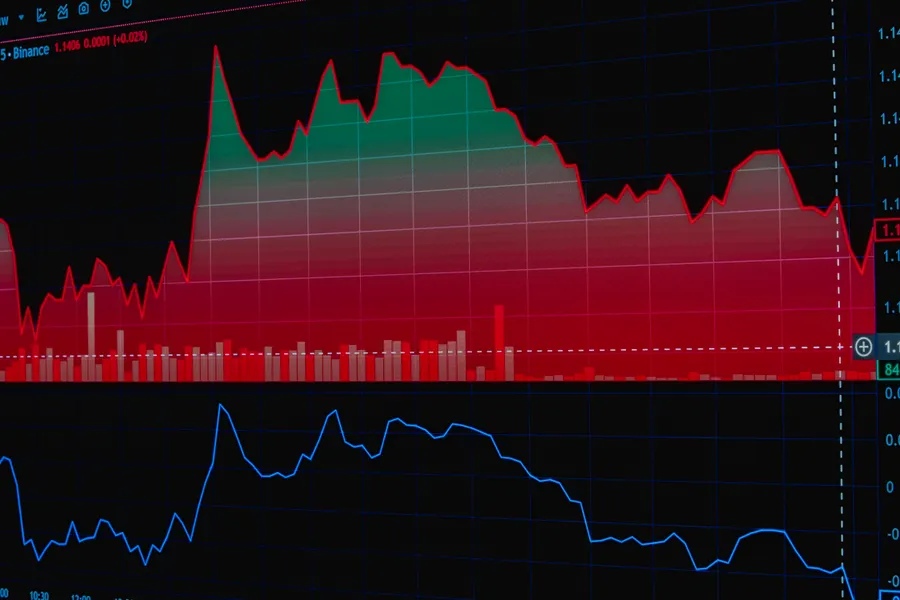
AI Slowdown Calls Trigger Semiconductor Stock Selloff
Nvidia and Broadcom led a 5.9% semiconductor selloff after Amodei, Altman, and Musk called for slower AI development and OpenAI delayed its IPO.
A weekend essay that moved Monday's market
Semiconductor stocks fell sharply Monday after the heads of three of the industry's most prominent AI labs, companies that have spent the past two years racing each other to build more capable models as fast as possible, published a rare, coordinated call to deliberately slow that same race down. A gauge tracking semiconductor stocks dropped 5.9%, with Nvidia and Broadcom leading the decline and the Nasdaq 100 falling 0.8%, as investors weighed what a genuine industry-wide pace change might mean for the capital spending cycle that has powered much of this year's market gains.
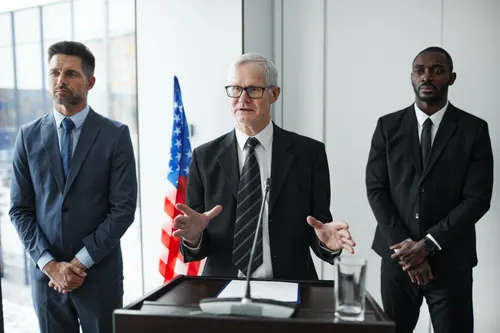
The catalyst traced back to Saturday, when Anthropic CEO Dario Amodei published a roughly 3,800-word essay titled "We Must Pace the Frontier" on his personal website, arguing that AI companies should deliberately slow how quickly they improve their most advanced models' capabilities. What turned a single company's blog post into a market-moving event was the response it triggered: OpenAI CEO Sam Altman and xAI's Elon Musk both publicly endorsed the proposal within a day, an unusual moment of alignment among fierce commercial rivals.
What Amodei's essay actually argues
Amodei's central claim is that AI capability has been advancing unusually fast since roughly this summer, a shift he attributes primarily to AI systems increasingly being used to help build the next generation of AI systems, a dynamic researchers call recursive self-improvement. His proposed three-step plan calls for independent external evaluators to gain deeper access into how frontier labs test their models, coordinated industry pacing rather than unilateral slowdown by any single company, and eventually broader international frameworks, all explicitly designed, in Amodei's framing, without "sacrificing commercial advantage or the United States' lead in AI."
Altman responded by committing OpenAI to accept independent evaluators with what the company described as "employee-like access" inside its systems, effectively agreeing to the first plank of Amodei's proposal. Musk's endorsement was brief but direct: "Dario is right," he wrote on X. Google DeepMind CEO Demis Hassabis added his own qualified agreement, saying Amodei's general direction was correct even if the specific details would still need to be worked out.
The IPO decision that gave the essay real teeth
The essay might have remained a talking point confined to AI policy circles if it hadn't landed the same weekend as a concrete business decision. Altman told Fortune in an interview published Saturday that OpenAI would not pursue its long-anticipated initial public offering in 2026, calling the timing "ill-advised" given the safety concerns now dominating industry discussion. That's a meaningful reversal: OpenAI's own CFO, Sarah Friar, had told employees just last month that the company would likely go public in 2027 "or even sooner" if the business continued to perform well. Pushing the listing back to at least 2027 signals the safety debate is affecting concrete capital-markets decisions, not just public messaging.
Anthropic's own position adds a layer of genuine tension worth noting directly: the company is simultaneously meeting with prospective investors ahead of its own potentially historic IPO even as its CEO publicly argues for industry-wide deceleration, a juxtaposition several outlets covering the story flagged as at least superficially contradictory, regardless of how genuinely Amodei's underlying safety concerns are held.
Why markets reacted the way they did
The connection between an AI safety essay and a semiconductor selloff runs through a fairly direct chain of reasoning: chip demand for AI infrastructure has been one of the dominant drivers of tech-sector earnings and capital expenditure this year, as seen clearly in Nvidia's own blowout quarter and aggressive forward guidance. If leading labs genuinely commit to deliberately pacing capability improvements rather than racing toward ever-larger models as fast as possible, the underlying demand assumption driving years of chip capex guidance could shift, even if no company has yet announced concrete plans to actually cut infrastructure spending.
RBC analyst Lori Calvasina captured the market's underlying anxiety in a note flagging what she termed "AI froth" as a genuine earnings risk factor heading into the back half of the year, a framing that predates this weekend's news but that Monday's selloff appeared to validate in real time. The reaction wasn't confined to pure chip plays either; Bank of America shares led losses among financials after CEO Brian Moynihan issued his own trading revenue warning the same day, suggesting broader market jitters extended beyond the AI trade specifically, even if semiconductor names bore the sharpest direct hit.
A skepticism worth noting
Not every reaction to Amodei's essay treated it purely as a safety-driven decision. Critics quoted in coverage of the essay suggested it could be read partly as a market-positioning move, an argument that a company simultaneously preparing for a major IPO benefits from being publicly associated with responsible, safety-conscious leadership regardless of the underlying commercial calculus. Anthropic itself has shifted its public stance on unilateral slowdown before, and Amodei's own critics have pointed to that history as reason for some skepticism about how literally the proposal should be read as a pure safety commitment versus a strategic communications move ahead of a historic fundraising event.
That skepticism doesn't necessarily undermine the substance of the safety concerns themselves, which multiple researchers across competing labs, including a since-departed Anthropic safety researcher and separate voices at OpenAI, have been raising with increasing public visibility throughout the year. But it's a genuine, reported tension in how the story has been received, not just praise from every corner.
What Trump's reaction adds to the picture
President Trump weighed in directly and critically. In comments Sunday, he dismissed the CEOs' collective warning, saying a slowdown wasn't necessary and arguing it would jeopardize America's competitive lead over China in AI development, a position he reiterated more sharply in a Truth Social post Monday criticizing Amodei by name. That reaction places the administration's stated national competitiveness priorities in direct tension with the safety-focused argument now being voiced publicly by the leaders of Anthropic, OpenAI, and xAI simultaneously, adding a political dimension to what began as an internal industry debate.
What investors are actually watching now
The practical question hanging over markets this week isn't whether Amodei's essay itself changes anything mechanically; a blog post commits no company to any binding action. It's whether the coordinated public alignment among Amodei, Altman, Musk, and Hassabis translates into genuinely slower model release cadences, reduced infrastructure spending growth, or continued independent evaluator access commitments that meaningfully change how the industry operates, versus remaining primarily a rhetorical moment that fades once the news cycle moves on. Companies whose valuations depend heavily on continued AI-driven enterprise adoption have real stakes in which outcome actually plays out, since a genuine industry-wide pacing shift would affect the pace of new capability releases that much of this year's enterprise software growth story has been built around. For now, Monday's selloff reflects genuine uncertainty rather than a settled verdict on what a "paced" AI industry would actually look like in practice, or how long the current unusual unity among competing AI lab leaders will actually hold.
Written by
Mr. Jitendra Bhatt
Deep understading of finance area and writer covering markets, investing, and economic policy.